Washable Throws, Checked Against Wash Care and Declared GSM
Machine washable is a claim, not a specification. How declared GSM, care-label wording, and drying method decide whether a throw survives repeated washing.
The Calm Finds editorial desk · Published Oct 1, 2026 · Updated Oct 2, 2026 · 7 min
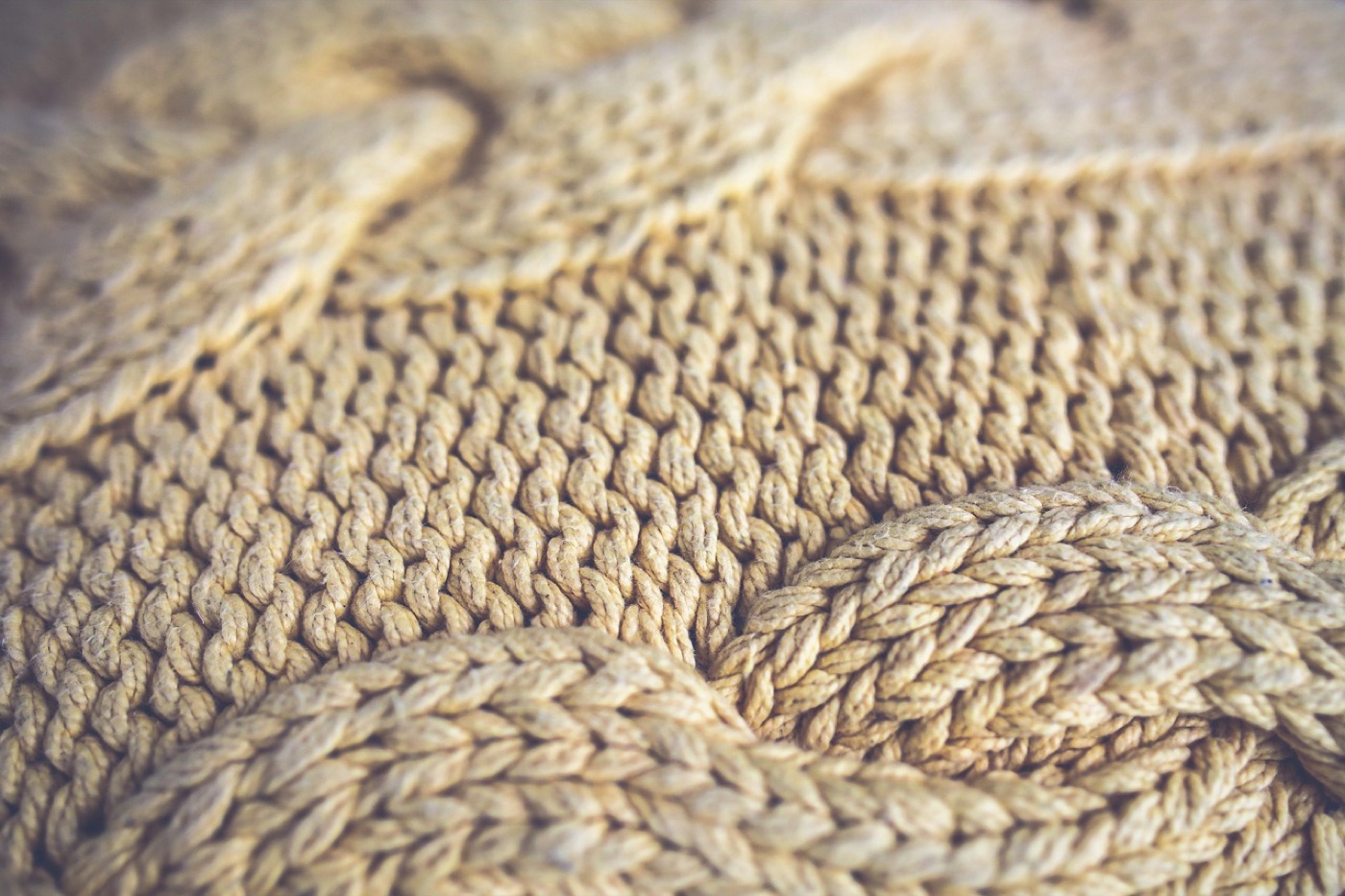
A throw is the only large object in the soft layer that gets washed on a schedule. Rugs get vacuumed, curtains get aired, a throw goes into a machine every few weeks and comes out different. That makes washability the first thing to interrogate and weight per square metre the second, and they are the only two parameters here that can be checked before the object arrives.
Washable is a permission, not a specification
US care labels are governed by the FTC’s Care Labeling Rule, 16 CFR Part 423, which requires manufacturers and importers of textile wearing apparel and certain piece goods to disclose regular care instructions. It defines a care label as a permanent tag attached so it stays legible for the useful life of the product, and it requires either instructions for a safe method or a warning where none is safe.
A permanent label is not the same as a machine-washable one — a throw can be dry-clean only, hand wash, or machine wash, and the label is what distinguishes them. The symbols follow the ASTM D5489 system: washtub, triangle, square, iron, circle, with dots for water temperature in the North American version. What the rule does not do is say whether the item will look good afterwards. It is a disclosure mechanism, not a durability rating.
GSM says how much fabric there is, not how thick it feels
Weight per unit area is measured under a standard: ASTM D3776 sets out the method, with a conditioned specimen, a calibrated balance and a defined cut area. Conditioning matters more than it sounds, because fabric is hygroscopic and its weight changes with the air it has been sitting in.
GSM is a good proxy. A throw at 250 g/m² and one at 400 g/m² are the same dimensions, but one has roughly three-fifths the material per square, which shows as a thinner hand, faster loft collapse after washing, and more transparency against a window. Published trade bands for fleece throws run from about 180 g/m² at the promotional end to 350 g/m² for a heavy winter throw.
Thickness is a different property and comes from construction, not weight. A woven throw at 300 g/m² can feel thicker than a brushed fleece at 350, because the nap adds apparent depth without adding much mass — the same absence of specification that the rug vocabulary documents on the floor side of the house.
Wash count is the variable that decides the outcome
Two standardised procedures frame what repeated washing does. AATCC LP1 covers home laundering by machine and LP2 by hand, both specifying water temperature, agitation, load and drying parameters so results are comparable between laboratories. On those sit TM135 for dimensional change after home laundering, TM143 for how a finished end product looks after repeated cycles, and TM61 for colourfastness to laundering.
A washable throw therefore does not fail at the first wash, it fails cumulatively. One at a mid-range weight with no anti-pilling finish will surface fuzz sooner than a heavier one, because there is less material to lose before the construction underneath shows. Wool fails differently: it felts rather than pills, and it felts because of agitation and heat rather than wear. Down and polyester fail in their own ways again, covered in the fill comparison.
Drying is where most washable throws are lost
A low-heat tumble and a flat dry are different instructions, not points on one scale. Low heat reduces mechanical action over a short period; flat drying applies neither tumbling nor heat. Woolmark’s published care guidance makes the causal point directly: a do-not-tumble-dry claim exists because ignoring it can cause shrinkage, and its mild drying process means reduced thermal action and short duration rather than a normal cycle.
Heat also fixes a stain, which is why spilled coffee is blotted cold and never rubbed. Direct sun is the slow damage: repeated exposure fades dye unevenly, so a throw on a sunlit sofa fades on the front fold while the underside stays at full colour.
Three specifications worth comparing
- A printed GSM between 250 and 400, with the wash temperature on the label. The specification to insist on, because a stated weight and a stated water temperature mean both fabric and process are documented.
- A low-heat tumble claim, or a flat-dry instruction. Pick the one that matches your dryer. If the label asks for flat drying and you have nowhere flat to dry a wet throw, resolve that first.
- A wool or wool-blend fill at 400 g/m² and above, machine washable on a wool cycle. Heavier and slower to lose shape than anything synthetic, and the category where the care instruction most often separates a throw that lasts a decade from one that felts in a season.
The picks
Some links below are affiliate links — we may earn a commission at no extra cost to you. As an Amazon Associate, we earn from qualifying purchases.
Washable is a permission and GSM is a weight, and together they are the only two things in this category that can be checked before the throw arrives. Look for a stated weight per unit area between 250 and 400 g/m², measured under a conditioning standard such as ASTM D3776, and a care label that states the water temperature rather than a bare word. Washing damages throws cumulatively rather than at once, which is why AATCC LP1 and LP2 define repeatable home-laundering parameters and TM135, TM143 and TM61 measure dimensional change, appearance and colourfastness after cycles. Drying decides most outcomes: low heat reduces mechanical action over a short period, flat drying applies none, and wool felts from agitation plus heat rather than from wear. Above 400 g/m² a wool or wool-blend throw is the most durable object in the category and the one most often ruined by a dryer set too high.
- Weight band for a used throw
- 250–400 g/m²
- Below this it reads thin
- About 250 g/m²
- Weight is measured under
- ASTM D3776
- Care symbols follow
- ASTM D5489
- US label rule
- 16 CFR Part 423
- Drying is where it is lost
- Low heat or flat dry
A printed GSM between 250 and 400, with the wash temperature on the label
What to insist on — declared weight plus declared process
This is the specification to insist on rather than a product to buy. A stated weight per unit area and a stated water temperature mean both the fabric and the process are documented, which is the difference between buying a throw and buying a guess. Published trade bands for fleece throws run from roughly 180 g/m² at the promotional end to 350 g/m² for a heavy winter throw, with 300 g/m² and above the point at which a fleece is described as substantial. Limitation — GSM is a weight, not a thickness, and a brushed nap adds apparent depth without adding much mass.
- Declared weight
- 250–400 g/m²
- Method to check for
- ASTM D3776, conditioned specimen
- Also on the label
- Water temperature, not the word washable
- Below 250 g/m²
- Reads thin regardless of the fabric name
- Limitation
- Weight is not thickness or loft
A low-heat tumble claim, or a flat-dry instruction
The drying step — where most washable throws are lost
A low-heat tumble and a flat dry are different instructions, not points on one scale. Low heat reduces mechanical action over a short period; flat drying applies no tumbling and no heat at all. Woolmark's published care guidance makes the causal point directly — a do-not-tumble-dry claim exists because ignoring it can cause shrinkage. Check this before ordering rather than after the first wash: if the label asks for flat drying and you have nowhere flat to dry a wet throw, that is a real constraint on the purchase.
- Preferred
- Flat dry, or low heat with reduced duration
- Symbol family
- Drying square, per ASTM D5489
- Why it decides the outcome
- Heat plus agitation is the felting mechanism
- Also avoid
- Direct sun — fades the front fold unevenly
- Check before ordering
- That you have somewhere to dry it
A wool or wool-blend fill at 400 g/m² and above, machine washable on a wool cycle
Placement: sofa throw, heavy wool — 400 g/m² and up
The most durable object in the category and the one most often ruined by a dryer set too high. Above 400 g/m² there is enough material that loft survives repeated cycles, and wool's failure mode is felting rather than the pilling that ends a synthetic throw's surface. Machine washable on a wool cycle means 30°C or 40°C very mild with the drum no more than a third full, per published wool care guidance. Limitation — it is the bulkiest thing to wash, and hand-wash guidance in the same documentation specifies floating the item in dissolved detergent rather than rubbing it.
- Declared weight
- 400 g/m² and above
- Fibre
- Wool or wool blend
- Wash
- 30–40°C, very mild, drum one-third full
- Failure mode
- Felting from agitation and heat, not pilling
- Drying
- Flat, away from heat and direct sun
| Specification | 250–400 g/m², temp stated | Low heat or flat dry | Wool at 400 g/m² and up |
|---|---|---|---|
| What the number is | Weight per unit area | Drying method | Fibre plus weight |
| Standard behind it | ASTM D3776 | ASTM D5489 drying symbol | Woolmark care guidance |
| Legal basis for the label | 16 CFR Part 423 | 16 CFR Part 423 | 16 CFR Part 423 |
| Failure mode | Pilling and loft loss | Felting from heat plus agitation | Felting, and bulk in the machine |
| Test that measures it | AATCC TM135, TM143 | AATCC LP1 drying parameters | AATCC TM61 for colour |
| Wash temperature | Stated on the label | Irrelevant — the dryer is the risk | 30–40°C very mild |
| Cost of getting it wrong | Thin hand, fast fuzz | Shrinkage that reshaping cannot fix | A season's use lost to one cycle |
| Best for | Everyday sofa throw | Any throw you own already | A throw that must outlast the sofa |
Where these numbers come from
- 16 CFR Part 423 — Care Labeling of Textile Wearing Apparel and Certain Piece Goods: definitions, what the rule requires, and the exemptions
- ASTM D5489 — Standard Guide for Care Symbols for Care Instructions on Textile Products: the five basic symbols and the D5489-96c version the FTC rule recognises
- AATCC TM135 — Dimensional Changes of Fabrics after Home Laundering: washing temperatures, agitation cycles and drying procedures
Frequently asked
- What GSM should I look for in a washable throw?
- Between 250 and 400 for a throw meant to be used and washed regularly. Below about 250 the fabric reads thin no matter what the listing calls it, and above 400 a washable throw is heavy enough that it will not sit comfortably in a domestic machine once wet. The number matters less than whether it is stated at all.
- Does washable mean the throw can go in a tumble dryer?
- No. Washable and tumble dry are two separate permissions, printed as two separate symbols. Low heat is the most a wool throw should see, and many care labels ask for flat drying instead, because heat plus agitation is what felts a wool fibre.
- How many washes before a washable throw stops looking right?
- Look at the pilling and the seams, not the calendar. A fleece throw at a mid-range weight will surface fuzz within a handful of washes and lose loft along the fold lines first. Wool at a heavy weight holds up better than anything synthetic, provided it is dried flat.