Fabric Weight and Drape: What GSM Means on Curtains
GSM predicts drape more reliably than fibre content. Where heavier fabric looks expensive, and how linen, polyester and chenille each hang.
The Calm Finds editorial desk · Published Sep 30, 2026 · Updated Oct 2, 2026 · 6 min
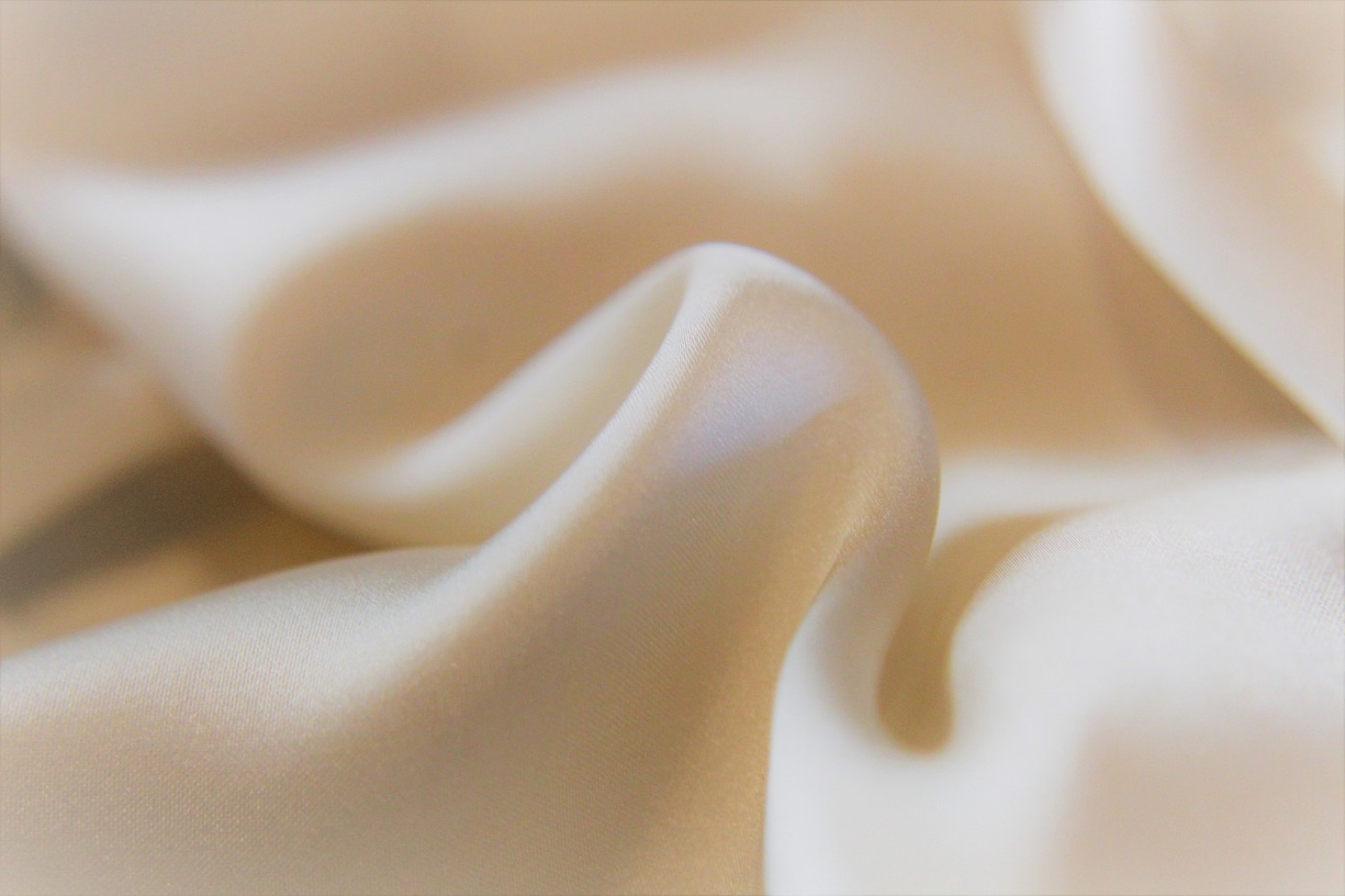
Drape is what the eye reads as quality, and it is predicted more reliably by grams per square metre than by anything printed on a fibre label. Weight is not a proxy for value — it is a proxy for how the fabric behaves when it hangs.
What weight actually predicts
| Weight | How it hangs | Where it works |
|---|---|---|
| Under 150 GSM | Soft, fluid, collapses into fine folds | Sheers, dimming layers, small windows |
| 150–250 GSM | Supple, folds move | Bedrooms, single panels, lined work |
| 250–350 GSM | Substantial, folds hold their shape | Living rooms, tall windows, full drops |
| Over 350 GSM | Heavy, slow-moving, needs a strong heading | Large windows, floor-to-ceiling drops |
The mechanism is simple. A heavier fabric has more mass per unit area, so gravity wins over the fabric’s own stiffness and the folds settle into a defined shape that stays put. A lighter fabric has less mass, so the same fold collapses and re-forms every time the panel is disturbed. Neither is better; they are different answers to the same question.
Fullness interacts with weight here. A heavy fabric at 1.5× hangs in fewer, larger folds than a medium fabric at 2.5×. Pushing both up at once produces a curtain that is stiff and bulky rather than generous. The ratio itself is in curtain width and fullness.
Where the weight starts to look expensive
The range that reads as decorator fabric is roughly 250 to 350 GSM at a full drop. The reason is not the number but what it enables: folds with enough body to cast a shadow, a heading that supports its own weight without sagging, and a hem that hangs rather than swings.
Above 350 GSM the fabric looks heavy in a domestic room rather than luxurious, and it will pull a lightweight heading out of shape. Below 150 GSM a tall window makes the shortfall obvious, because a long drop exaggerates any lack of body. Where more weight earns its place is a floor-to-ceiling drop in a high-ceilinged room, where the scale of the window is what a mid-weight fabric looks thin against.
How each fibre hangs
Linen drapes with more fluid movement than anything else in common use, and it creases. Both follow from the same fibre: a stiff, irregular yarn that folds unevenly and takes a crease readily. Linen looks relaxed and expensive in a room that is not fussy about pressing, and neglected in one that is.
Polyester drapes well when the yarn is a fine filament, and holds a pressed crease far longer than linen, which means less maintenance. At low quality it reads as stiff and synthetic, and the giveaway is that it holds a shape nobody asked for. A good polyester at 250 GSM hangs very close to linen.
Chenille is a pile construction rather than a fibre. It has a soft, velvety surface that catches light, which makes it read as richer at a lower weight than a flat weave of the same GSM. It also has poor drape: the pile holds the fabric away from the wall, so the curtain stands out from the window instead of falling against it, and it crushes where the folds compress.
Single layer against double
For light blocking, a single layer and a double layer are different objects, not the same object at two prices. A single panel blocks what its own construction blocks. Two layers with an air gap between them do something no single fabric can: the gap is the insulator, and it is why a lined curtain holds heat differently from its face cloth alone.
Weight follows the lining. A lined panel’s face cloth can sit at a lighter GSM than the same fabric hung alone, because the lining supplies the body the face cloth is not paying for. This is where stated blocking and stated weight come apart, and a page quoting both is usually quoting the face cloth.
The number worth asking for is the finished weight of the panel rather than the cloth, and it is printed almost never. A published care or technical document is the legitimate place to look. How each layer earns its place is in lining and layers.
Frequently asked
- What GSM is best for curtains?
- Around 200 to 300 GSM reads as a substantial decorator fabric that hangs in defined folds. Below 150 the cloth hangs softly and may look thin at the top of a tall window; above 350 the folds become heavy and slow, and the fabric needs a robust heading to carry itself. For a lined panel the face cloth can sit lighter because the lining adds body.
- Does a higher GSM mean better quality?
- No, only more cloth. A heavy fabric in a poor weave can crease badly and hang unevenly, and GSM says nothing about how the yarn was spun or whether the weave is dense. It predicts drape, which is one property among several.
- Is linen better than polyester for curtains?
- Neither is better. Linen drapes with more fluid movement and creases, which suits a relaxed room and needs a fabric that will be pressed. Polyester holds a pressed crease longer, dries fast and is easy to wash, but a good quality polyester at 250 GSM hangs very close to linen. The deciding factor is how much maintenance the room will get.